Hey there, if you’ve ever stared at a championship ring—whether it’s the Super Bowl’s massive diamond-studded ones, NBA’s sleek gold designs, or even college sports’ detailed pieces—you’ve probably wondered: what the hell are these things actually made of? I mean, they’re supposed to represent a team’s blood, sweat, and tears, so their materials matter way more than just looking shiny. As someone who’s spent the last 8 years selling custom championship rings to teams and organizations all over, I’ve seen every material under the sun (and some I had to Google to confirm was even real) for these things. Today, I’m breaking down what goes into these iconic rings, straight from the supplier’s side—no stuffy industry jargon, just real talk. Championship Ring
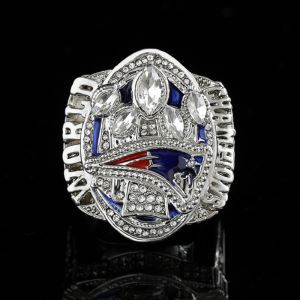
First off, let’s get one thing straight: not all championship rings are created equal. A little league baseball ring for 12-year-olds? Way different than an NFL Super Bowl ring. But the core materials are pretty consistent, and that’s what people actually care about. Let’s start with the base metal—because that’s the backbone, and it’s where most of the cost and quality difference lives.
Most of the premium rings you see (the ones that get auctioned off for millions, or the ones we get requests for from college athletic departments) use two main base metals: sterling silver and 10k, 14k, or even 18k gold. Wait, let’s keep it real—you’ll almost never see 24k gold for championship rings, because that’s way too soft. 24k is pure gold, like the stuff they make coins from, bend it and it dents. No team wants a ring that falls apart after a year of players showing it off to their kids. So 14k gold is the workhorse here. It’s 58% pure gold mixed with copper, silver, and zinc—hard enough to hold up to daily wear, enough gold to look rich, and not crazy expensive. A few top-tier leagues (looking at you, NBA) go with 18k gold for their championship rings, because they want that extra luxury feel. The 18k has less alloy, so it’s a tad softer, but it’s way more lustrous—everyone from fans to players can spot the difference.
Now, sterling silver is the go-to for smaller rings, like youth sports, local tournaments, or even corporate championship rings for things like sales contests. It’s way cheaper than gold, but it’s not just cheap junk—we use .925 sterling silver, which is 92.5% pure silver, mixed with copper to make it sturdy. The only catch? Silver tarnishes. If you leave a silver ring in a drawer for a few months, it’ll get that dull blackish patina. So we always plate it with rhodium (we’ll get to plating later) to keep it shiny for longer. That being said, I always tell youth league parents: don’t let your kid wear it swimming. Chlorine will eat through the rhodium and turn their green, so just a heads up.
Wait, there’s also brass. Yeah, brass is the cheap stuff—we almost never use it for official championship rings, only for like fun giveaways or practice rings. It’s super affordable, but it discolors fast, so it’s not worth it for anyone who actually wants something that lasts. If a coach comes to us asking for brass rings for their state tournament, we’ll walk them through why it’s not a good look, but if they just need a bunch of cheap ones for the team to hold for photos? We can do it, no problem.
Next up: the stones. This is what makes championship rings pop, and where the most myths live. I can’t tell you how many times a team has asked, “Are those real diamonds?” Short answer: sometimes, but not always. Let’s break it down. Real diamonds are rare and expensive, so only the top pro leagues use them. The NFL, for example, puts between 100 and 150 diamonds on each Super Bowl ring, and those are usually real, mined diamonds. The NBA goes even bigger—their recent championship rings have over 1 carat total weight of real diamonds, with some custom ones going higher. But here’s the thing: teams don’t just buy random diamonds. Most of the time, they buy lab-grown diamonds. They’re chemically identical to mined ones, cost 30-40% less, and have way better ethics—no conflict diamonds, which is a huge selling point now. We’ve had three college teams switch to lab-grown diamonds in the last year alone because their boosters cared about that stuff.
But for 90% of the rings we sell? Cubic zirconia. That’s the workhorse stone for championship rings. Cubic zirconia is a lab-made crystal that looks almost identical to a real diamond, but costs like 1/100th the price. It’s hard, shiny, and doesn’t tarnish, so it’s perfect for rings that get worn a lot. I once had a high school football coach come to us with a design that had 200 small stones, and we quoted him $800 for a ring with cubic zirconia—he couldn’t believe it when we told him real diamonds would be $5,000. The only downside? Cubic zirconia can scratch if you hit it hard against something, so we always suggest that players take theirs off when lifting weights or doing yard work.
Wait, what about other stones? We do a lot of custom stuff with colored stones too. For college teams, they’ll use their school’s colors—so a University of Alabama ring has rubies or red cubic zirconia, a University of Michigan ring has blue sapphires or blue stones. Some golf tournaments use emeralds, soccer leagues use amethysts, whatever. We even did a ring for a darts championship that had black onyx and red garnets—super unique, and the team loved it.
Now, let’s talk about plating. Because the base metal is one thing, but the plating is what makes it stay shiny. If you’ve ever had a cheap ring that turned your finger green, that’s because of bad plating. We use two main platings: rhodium and gold plating. Rhodium is a silver-white metal, super hard, and it’s what we put on sterling silver rings to stop tarnishing. It also makes silver look like platinum, which is a nice upgrade for a cheaper base metal. For gold rings, we’ll do a thick gold plating (usually 2-3 microns, which is way thicker than most cheap rings) to keep the color from wearing off. If a team wants a rose gold ring? We do rose gold plating too—mix a little copper with the gold, and you get that warm pink hue. The key here is thickness. We never skimp on plating. A lot of cheap suppliers use 0.5 micron plating, which will wear off in 6 months. We use at least 2 microns, and we warranty all our plating for 2 years—if it fades or chips within that time, we’ll re-plate it for free, no questions asked.
Wait, there’s one more component that people rarely talk about, but it’s super important: the enamel. That’s what fills in all the designs on the ring—like the team logo, the year, the score of the championship game. If you look at a ring and see bright, crisp blue letters or a red mascot, that’s enamel. We use two types: hard enamel and soft enamel. Hard enamel is the fancy stuff, used on premium rings. It’s mixed with resin, baked on to the metal, and polished flat, so it’s smooth and durable. It doesn’t scratch easily, and it stays bright for years. Soft enamel is cheaper, where you pour the enamel into the grooves of the design, and it’s a little raised. It’s great for small rings or kids’ stuff, but it can scratch over time, so we only use it for custom giveaways or low-budget rings.
Let me give you a real example to put this all together. Last year, we did a championship ring for a small college basketball team that won their first conference title ever. The client wanted something meaningful, not just flashy. We went with 14k gold as the base, since they wanted something that would last for the players’ lifetimes. For stones, we used lab-grown diamonds (total of 0.75 carats) and red cubic zirconia for the school’s colors. The enamel was hard enamel—their mascot, a tiger, was bright orange, and the year was black. We plated it with a thick 2.5 micron gold, and it cost the team under $1,200 per ring. They were blown away—said it was way less than they expected, and the players loved that it was real gold, not silver.
Now, let’s get into the stuff that’s not metal or stone. The inside of the ring! You’ve probably never noticed, but every championship ring has engraving on the inside. That’s where we put the player’s name, their number, “2024 Conference Champions,” whatever the team wants. We use deep laser engraving for that, because it’s permanent—no fading, no wearing off. Some teams even put little personal messages for each player, like a nickname or a inside joke, on the inside. That’s my favorite part—seeing the personal touches.
Wait, what about the big, iconic rings? Like the ones that get made for the World Series or Super Bowl. A lot of people ask if those are made with special materials. The 2023 Super Bowl rings, for example, had little pieces of the actual game ball embedded in them. Oh right! That’s a thing. We can do custom inlays too—pieces of the field, a net from a soccer championship, a piece of the tournament trophy, even a tiny piece of wood from the arena. If a team wants to include a piece of their championship moment into the ring, we can do it. That’s a huge selling point for us, because it makes the ring way more personal than just a bunch of stones and metal.
Now, let’s talk about what to watch out for when you’re ordering a championship ring, because not all suppliers are the same. I’ve seen people get scammed so many times. A team will order a ring online for $200, thinking it’s 14k gold with real diamonds, and it shows up as brass with cubic zirconia plated with 0.5 micron gold, and it turns green after a week. The main things to check are: what’s the base metal? What’s the stone material? How thick is the plating? Reputable suppliers will tell you exactly what materials they use, no fine print. They’ll also give you a sample of the materials if you ask—we always send samples of our gold and stones to teams before they order, because we want them to see what they’re getting.
As your go-to championship ring supplier, I always tell teams: pick materials that fit your budget, but don’t skimp on the stuff that matters. If it’s a local rec league ring, sterling silver with cubic zirconia is perfect. If it’s a pro or college team, 14k gold with lab-grown diamonds is worth the investment, because these rings get passed down, sold at auctions, or kept as heirlooms. I had a guy last year who bought his high school state championship ring from 1998, and sent it to us to re-plate and re-stone—said he wanted to give it to his son when he graduated college. That’s the kind of thing that good materials make possible.
Wait, let’s address the elephant in the room: why not all real gold and diamonds? It’s cost, obviously. A full 18k gold ring with 2 carats of real mined diamonds would cost $10,000-$15,000 per ring, which is way out of reach for most teams. Even the NFL, which is the biggest league in sports, only gives each team 150-200 rings per year—if they used real high-end diamonds, that would cost millions, and they’d have to cut the number of players or staff that get rings. So most pro leagues balance quality with cost by using lab-grown stones and solid gold, which is why their rings look so good without being outrageous.
Another thing: weight. Championship rings are supposed to feel substantial. A ring made with cheap brass is lightweight, and it feels cheesy. The right materials (solid gold or sterling silver) give it heft—when you hold it, it feels like something special. That’s why we always weigh the sample rings for teams, so they can feel the difference. A 14k gold ring usually weighs 20-25 grams, which is heavy enough to feel like a championship ring, not a costume piece.
I’ve been doing this long enough to know that teams don’t just buy a ring—they buy a memory. The materials aren’t just random parts; they’re supposed to represent that moment when everyone worked their asses off to win. So when you pick a supplier, make sure they understand that. Don’t go for the cheapest option, because you’ll end up with a ring that fades or falls apart. Go for a supplier that uses quality materials, is transparent about what they use, and will work with your budget.

If you’re a coach, athletic director, or event organizer and you’re looking to get championship rings for your team or tournament, hit me up. We can go over your design, your budget, and what materials make the most sense for you—no pressure, no confusing sales pitches. I’ve worked with everything from 8U soccer teams to D1 college programs, so I know how to make a ring that fits your needs and your budget.
Custom Ring References:
- World Jewelry Confederation. "Championship Ring Materials and Standards." 2022.
- NFL Properties. "Super Bowl Ring Specifications and Materials." 2023.
- American Gem Society. "Lab-Grown vs. Mined Stones for Custom Jewelry." 2021.
- International Enamels Association. "Enamel Types for Custom Jewelry and Awards." 2020.
- Fine Jewelry Association. "Plating Thickness and Durability Guidelines." 2022.
Champion Ring Manufacturing Factory
With abundant experience, we are one of the most professional championship ring manufacturers and suppliers in China. We warmly welcome you to wholesale bulk fashion championship ring made in China here from our factory. Good service and quality products are available.
Address: No.496, Chengdian Road, Zhejiang, China
E-mail: admin@championrings.cn
WebSite: https://www.jewelry-ftys.com/
