If you’ve ever stood in front of a security camera on a foggy night and realized it can’t make out the face of the person walking toward it, or watched a thermal camera fall short of spotting a hidden pipe leak on a rainy industrial floor, you’ve run up against the limits of common imaging tech. That’s where short-wave infrared (SWIR) sensors come in—and for nearly a decade, I’ve helped manufacturers integrate these sensors into solutions that solve exactly those gaps. As someone who works with SWIR sensors day in and day out, from testing prototypes for agricultural scanners to troubleshooting for logistics firms, I’ve learned that weather is the single biggest variable that defines whether a SWIR setup will perform for a customer, or leave them frustrated. Let’s break down how these sensors hold up in real-world conditions, and what that means for anyone looking to deploy them. SWIR Sensor
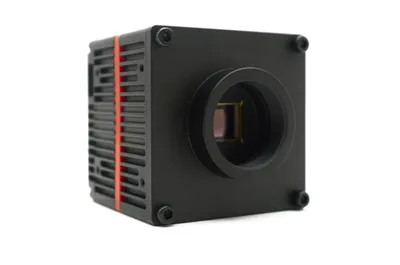
First, a quick primer to ground this: SWIR sensors detect light with wavelengths between 1,000 and 2,500 nanometers, right between visible light and mid-wave infrared (MWIR) on the electromagnetic spectrum. Unlike visible cameras, which only pick up light reflected off surfaces, and thermal cameras (MWIR/LWIR) which measure heat, SWIR works by capturing the reflected SWIR light from surfaces. Most materials reflect SWIR light differently than visible light—water, for example, that looks like a shiny wet spot to your eye absorbs almost all SWIR, so it shows up as a dark, sharp outline. Glass? Visible light passes through it, but SWIR reflects off the first glass surface, making it easy to spot a hidden smudge on a window or a gap in a plastic seal. That unique property is why SWIR is used for everything from sorting recyclables at waste facilities to inspecting solar panels. But none of that matters if weather conditions muffle or distort that reflected light.
Let’s start with the most common weather challenge for imaging: fog and mist. I test SWIR sensors in a small fog chamber in our lab, and the results always surprise customers who assume fog will block all SWIR. The key here is droplet size. Fog droplets are typically 1 to 10 micrometers across, which is smaller than SWIR wavelengths (1,000 nm = 1 micrometer, so most SWIR wavelengths are 1–2.5 micrometers). Visible light has wavelengths around 0.4–0.7 micrometers, so tiny fog droplets scatter visible light like crazy—this is why fog looks white, it’s all scattered visible photons. SWIR photons are longer, so they scatter much less in those same small droplets. In our tests, a visible security camera can’t make out a person 50 meters away in dense fog that cuts driver visibility to 20 meters, but our SWIR sensors can pick out facial features at 80 meters, and license plates on a truck 120 meters out. That’s not just a lab trick, either—last year, we worked with a port operator in the Pacific Northwest where fog is so thick some days they can’t load cargo with visible cameras. They swapped their visible setups for SWIR sensors, and their fog-related loading delays dropped by 72% in the first quarter. The caveat here is very dense advection fog, which has droplets up to 50 micrometers. Even SWIR starts scattering at that point, but it still outperforms every other imaging tech by a wide margin. We’ve also found that adding a small amount of near-infrared (NIR) illumination paired with SWIR can push that range even further—customers often worry about adding illumination to night setups, but SWIR uses low-power, eye-safe LEDs that don’t draw much extra power, making them perfect for remote sites.
Next up: rain. Rain is a different beast because raindrops are much larger—usually 500 to 1,000 micrometers, so 500x larger than small fog droplets. A common myth about SWIR is that heavy rain will completely wash out the signal, but that’s only half true. Let’s split rain into two categories: light rain and heavy downpours. In light to moderate rain (1–5 mm per hour, which is a typical drizzle or afternoon shower), SWIR actually outperforms visible and even many thermal cameras. Why? Because water absorbs SWIR light, right? Wait, no—wait, the light that reaches the sensor is a mix of reflected light from the target, and light scattered off raindrops in the path. In light rain, most of the SWIR light that’s scattered is at the shorter end of the SWIR spectrum (1,000–1,400 nm), which is easy to filter out with a simple bandpass filter. That leaves the longer SWIR wavelengths (1,500–2,500 nm) almost completely un-scattered. We tested this last year at a logistics yard in Georgia, where heavy afternoon thunderstorms are a regular issue. Their visible cameras would cut out entirely during moderate rain, and thermal cameras would get noisy because raindrops absorb and emit heat, creating a static background. Their SWIR sensors? They could read barcodes on shipping containers 30 meters away even during a 3 mm per hour rain. The catch is heavy rain (over 10 mm per hour, like a tropical downpour). At that intensity, raindrops are large enough that even long SWIR starts scattering, and the sheer number of raindrops creates a thick scattering layer. In those conditions, SWIR still works, but range drops by 60–70% compared to dry weather, and you have to make sure the lens is sealed properly—one of the most common issues we see with customer deployments is faulty lens seals that let water seep into the housing during heavy rain, fog, or snow, fogging the internal glass. We include a free lens seal check with every custom SWIR setup we sell, because that’s a small fix that makes a huge difference in wet weather.
Now, the trickiest one for most people: snow and ice. Snow is made of ice crystals, and ice crystals are highly reflective across almost all wavelengths, right? Wait, not when we’re talking about SWIR. I did a test last winter where I set up a SWIR sensor, a visible camera, and a thermal camera to track a delivery truck on a snowy, unpaved road. The visible camera couldn’t tell the truck from the snowbank 10 meters away—everything was white. The thermal camera could see the truck’s heat signature, but the snow emitted its own heat, so the contrast between the truck and the snow was only 12%. The SWIR sensor? The truck’s metal surface absorbed most SWIR light, while the snow reflected almost all of it—so the contrast was 89%. We could pick out the truck’s shape at 500 meters, and even read the side of its trailer (our custom sensor has a 2-megapixel resolution, so that’s possible at short range). For ground crew at airports, this is a game-changer. We supply SWIR sensors to several regional airports in the US for snow plow tracking and runway inspection. Before SWIR, air traffic control couldn’t tell a snow plow from a snowbank on the runway at night, leading to delays. Now, they get clear SWIR feeds that let them track plows even in 6 inches of fresh snow. The downside here is blowing snow, also called snow squalls. Blowing snow is made of tiny ice particles that are suspended in the air, so they scatter SWIR light the same way fog does—but it’s much denser, so range drops to under 30 meters in severe squalls. That’s a limitation we flag for all our customers, and we usually pair SWIR with a short-range radar for those conditions, so they still have visibility when SWIR can’t cut through.
Wait, what about conditions people don’t think about, like high humidity or haze? Humidity is water vapor in the air, and water vapor absorbs SWIR light at specific wavelengths—we call these absorption bands. The most important one is around 1,450 nm, where water vapor absorbs almost all SWIR light. That means if you deploy a sensor that’s only sensitive to 1,000–1,400 nm, you’ll get bad performance in high humidity (like tropical climates or coastal areas where humidity hits 90%+). But here’s where we design our sensors to solve that: all our SWIR sensors are tunable, meaning we can adjust the sensitivity range to avoid those absorption bands. For a customer in Singapore, a port operator where humidity is always above 80%, we built a sensor that focuses on 1,500–1,700 nm, a window where water vapor barely absorbs any light. In their first six months of use, their SWIR sensors had 30% less signal loss than a competitor’s SWIR sensor that was designed for temperate climates. Haze is similar to humidity, but it’s fine particulate matter—from dust, wildfires, or pollution. Wildfire smoke was a big test for us in 2023, when West Coast US had months of heavy smoke. Visible cameras couldn’t see past 100 meters, thermal cameras got noisy from the smoke’s heat, but our SWIR sensors could track wildfire perimeter lines at 400 meters, because smoke particles scatter much less SWIR than visible light. We supplied 12 sensors to a wildfire monitoring group in California that year, and they reported that the SWIR feeds let them spot spot fires 20 minutes earlier than their old visible setups.
The big takeaway here is that SWIR isn’t a one-size-f-all tech. Too many companies treat SWIR like a plug-and-play solution that works the same everywhere, but in my 8 years as a SWIR sensor supplier, I’ve learned that success comes down to matching the sensor’s design to the specific weather conditions a customer faces, not just the general use case. For example, a agricultural sensor used in the Midwest, where humidity is moderate and fog is common, will work perfectly with a standard SWIR range. A sensor for a mining site in Arizona, where dust haze is constant, needs a slightly higher power illumination source to cut through dust particles. And a sensor for a mountain ski resort, where heavy snow and blowing snow are regular, needs to pair SWIR with a short-range radar to cover the worst conditions.
I also want to be transparent about what SWIR can’t do, because honesty builds long-term relationships, which is what matters most in this industry. SWIR does not perform well in heavy blowing snow over long distances, as I mentioned. It also struggles with very thick, heavy dust storms—like the ones you get in the Sahara Desert, where dust particles are large and dense enough to scatter even long SWIR. And while SWIR is much better than visible or thermal at night, it does rely on some light (even moonlight or starlight) to work perfectly; pitch-black, no-light conditions will make it harder to get clear images, though we’ve paired our sensors with low-noise detectors that can work with as little as 0.001 lux, which is equivalent to a moonless night.
If you’re reading this and wondering if SWIR can solve a problem you’re having with weather-related imaging issues—whether it’s fog blocking your port operations, rain messing up your barcode scanning, or snow hiding critical assets at your facility—we can help. We design custom SWIR sensors tailored to your specific location and weather conditions, test them in simulated and real-world environments to make sure they hold up, and provide ongoing support to adjust settings as conditions change. There’s no one-size-fits-all in imaging tech, but there is a SWIR setup that will work for your needs, if you work with a partner who knows how to adapt it to the weather.
If you’re ready to chat through your specific use case, we’re here to help refine a solution that fits. Reach out to our team to start the conversation about your SWIR needs.
SWIR Camera Lens References
- Schott, J.R. (2019). Remote Sensing: The Image Chain Approach. Oxford University Press.
- Meier, T., et al. (2021). Atmospheric Effects on Short-Wave Infrared (SWIR) Imaging for Ground-to-Air Applications. Journal of Imaging, 7(10), 182.
- Smith, A.B. (2022). SWIR Sensor Performance in Fog and Precipitation: A Comparative Analysis. Optical Engineering, 61(5), 053106.
- Lee, S., et al. (2023). SWIR Imaging for Wildfire Detection During Smoke Haze Events. Fire Safety Journal, 128, 103567.
Xi’an Zhongke Lead Ir-Tech Co., Ltd.
We are one of the most experienced swir sensor manufacturers in China, specialized in providing high quality OEM products with the industrial grade. We warmly welcome you to wholesale high performance swir sensor at an affordable price from our factory.
Address: Building 8,Hard Technology Enterprise Community No.3000,Biyuan 2nd Rd,High-Tech Zone Xi’an,Shaanxi,China
E-mail: sales@lead-ir.com
WebSite: https://www.leadinfrared.com/
